Structured JSON today
The live JSON export carries the course, objectives, review notes and every lesson's script, key points and checks.
Live today
Coursecast treats a course like software: objectives, claims, lessons, items, scenarios, media cues and provenance live in one intermediate representation. Compile it to Word and Markdown today, and to SCORM, xAPI, cmi5, QTI and web on the roadmap.
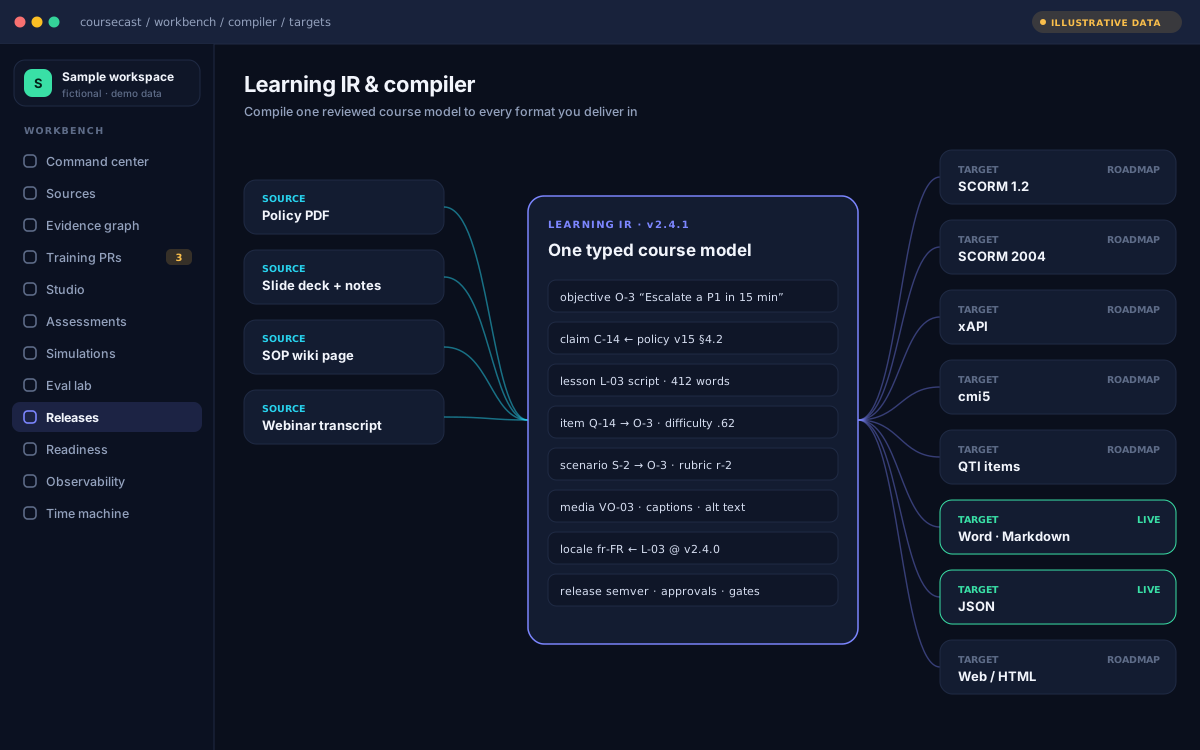
Illustrative preview of the roadmap workbench · fictional sample data
The live JSON export carries the course, objectives, review notes and every lesson's script, key points and checks.
Objectives, claims, lessons, items, scenarios, media and locales with stable IDs.
Every object knows its sources, version and approvals.
SCORM 1.2, SCORM 2004, xAPI, cmi5, QTI, HTML, DOCX.
Same IR, same output, so releases can be reproduced.
A documented schema you can read and write.
Drafting produces structured objects, not a blob of text.
Edits, checks and PRs operate on objects.
Build every delivery format from the same release.
Every output carries its provenance.
Every live draft can be exported as JSON with the course title, audience, summary, objectives and review notes, and every lesson's script, key points and knowledge checks. It's the same structure the app edits, so developers can map it into an LMS import, a wiki or an internal tool today.
// the JSON export, shortened
{
  "course_title": "Incident response 101",
  "learning_objectives": ["Escalate a P1 within the policy window"],
  "lessons": [{
    "title": "The 15-minute notification rule",
    "narration_script": "When a ticket is classified P1…",
    "key_points": ["The clock starts at classification"],
    "knowledge_check": [{ "options": ["By 10:32", "By 10:17"], "correct_option": 1 }]
  }]
}
The details that separate a governed system from a generator. All of these are roadmap design, shown so you can judge the direction.
Locked for verbatim critical text, transform for instructional rewriting, enriched for added examples. Set per passage.
One model, different depth for new hires, experts and managers.
Objectives with prerequisites, so sequencing is reasoned rather than guessed.
How many items per objective, at what difficulty.
Web course, SCORM/cmi5, narration, slides and facilitator guide, microlearning, tutor context, API objects.
Rebuild only what a change touched.
Today you export a reviewed course to Word, Markdown, narration scripts or JSON. The roadmap adds real releases:…
Most teams have years of courses built from sources that have since changed. Migration inventories the library,…
An evidence graph connects each source clause to the objectives, lessons, questions, scenarios and tutor answers that…
Draft a course from your own document in minutes. The rest of the platform is being built in the open.
Free during early access · No account needed · We don't keep your files